
7 High-Impact Ways Retailers Use Digital Signage to Increase Sales and Improve In‑Store Experience (2026)
Digital signage has evolved far beyond static screens and looping promotions. In 2026, it’s a measurable revenue and experience platform—powered by cloud software, real-time data, and increasingly, AI.
Retailers using digital signage report up to a 23–33% increase in sales, higher average transaction values, and reduced operational friction compared to print signage. (Source: [sci-tech-today.com], [zipdo.co])
Below are 7 proven, modern ways retailers are using digital signage today, with examples that scale from single locations to multi‑store operations.
1. Dynamic, Motion-Based Content That Stops Shoppers
Static posters fade into the background. Motion doesn’t.
Digital displays with video or animated content receive up to 400% more views than static signagebecause the human eye is naturally drawn to movement.
Modern retail use cases:
- Short product videos near shelves
- Lifestyle clips showing products in real-world use
- Animated promotions that change by time of day
Why it works:
Shoppers can visualize products faster, which reduces hesitation and increases impulse purchases.
Shoppers can visualize products faster, which reduces hesitation and increases impulse purchases.
2. Interactive Product Discovery & “Endless Aisle” Screens
When a product or size isn’t available, the sale doesn’t have to end.
Touch-enabled digital signage allows customers or associates to:
- Browse extended inventory
- Order out-of-stock items
- Compare variations or specs instantly
Over 60% of shoppers say digital signage helps them find products faster, directly reducing abandoned purchases.
Best placements:
- Apparel tables
- Electronics departments
- Auto showrooms
- Home improvement aisles
3. AI‑Driven Personalization (Without Being Creepy)
What was “future tech” in 2017 is mainstream in 2026.
Today, over 60% of digital signage systems use AI to personalize content based on factors like:
- Time of day
- Inventory levels
- Weather
- Anonymous audience data (no facial recognition required)
Examples:
- Promote cold drinks on hot afternoons
- Push overstocked items automatically
- Highlight seasonal products in real time
Retailers using AI-driven content report 20–30% higher engagement and measurable sales lift.
✅ Privacy note: Modern systems rely on anonymous, aggregated data—not personal identification—aligning with current privacy expectations and regulations.
4. Window Displays That Drive Foot Traffic 24/7
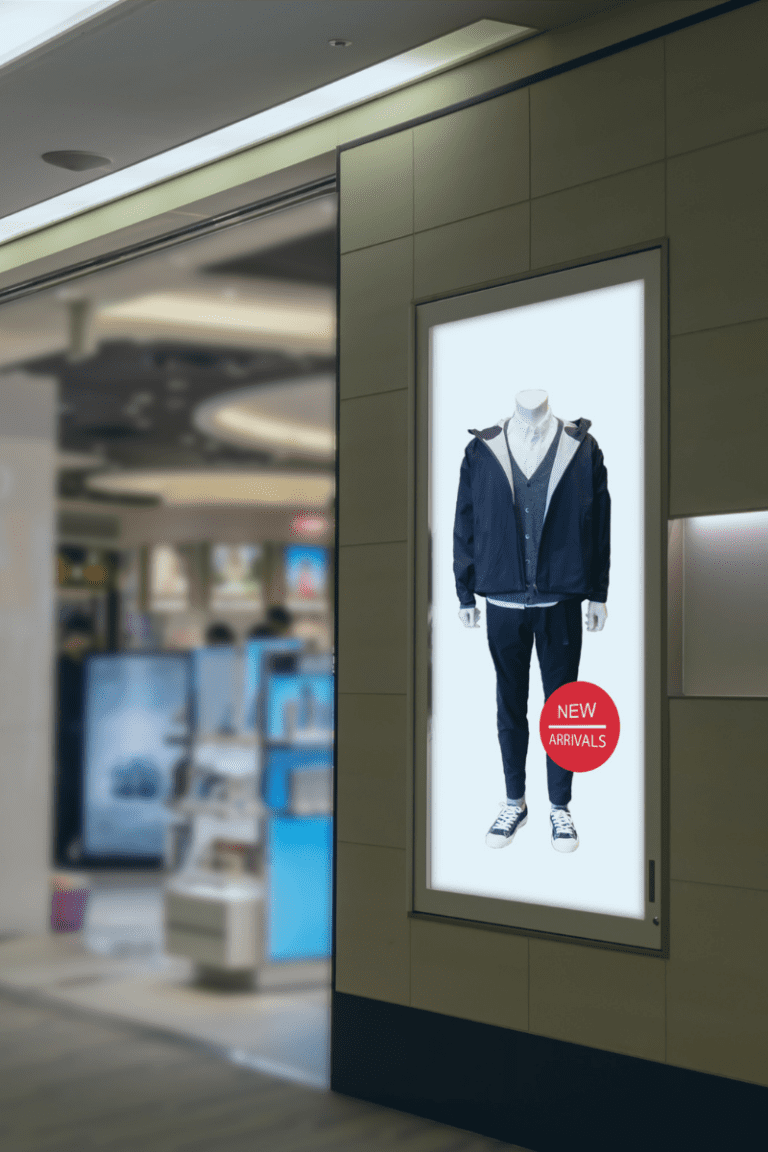
Digital signage in storefront windows turns passive displays into always-on sales tools.
According to retail studies:
- 80% of consumers are more likely to enter a store after seeing a digital sign outside
High-performing ideas:
- LED video walls behind mannequins
- Real-time promotions and countdowns
- Brand storytelling loops that change weekly
Bonus:
Digital windows eliminate constant reprinting and reduce setup labor.
5. Real-Time Promotions, Pricing & Inventory Messaging
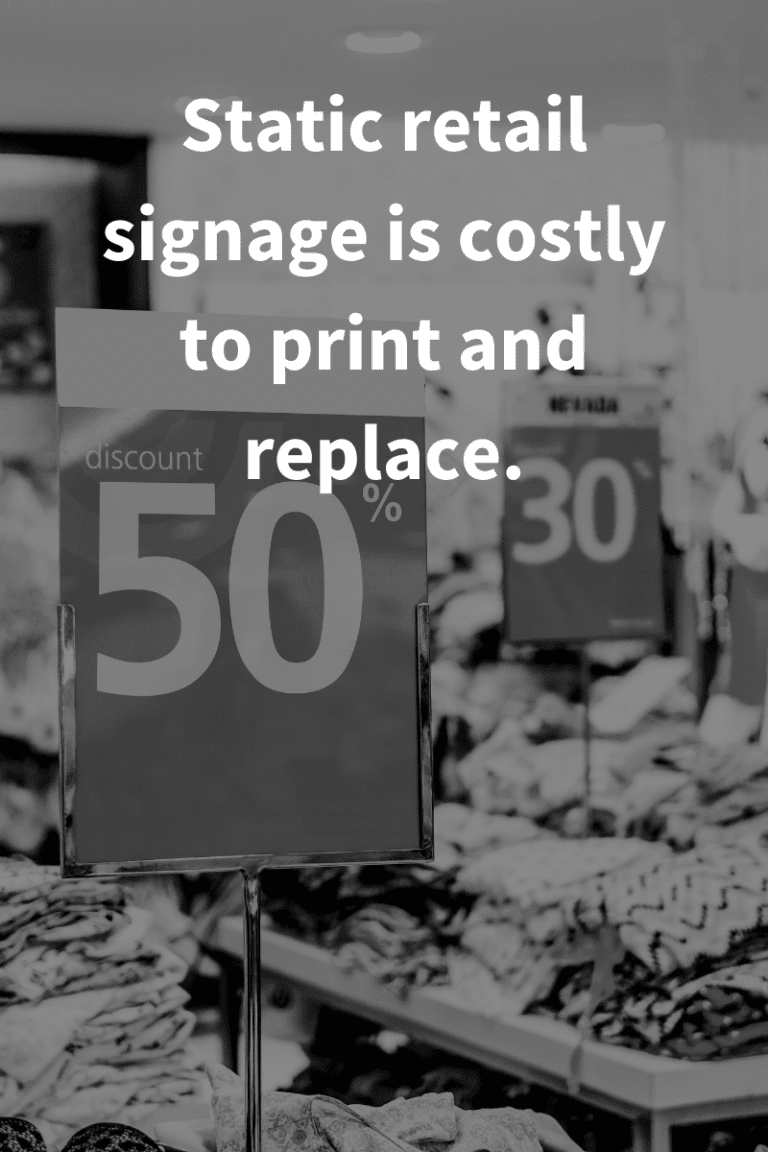
Printed signage can’t keep up with modern retail.
Digital signage integrates with POS and inventory systems to:
- Update pricing instantly
- Remove promos when stock runs out
- Highlight high-margin or expiring items
Retailers using real-time digital signage report:
- Lower pricing errors
- Faster promo changes
- Reduced labor costs compared to print updates (Source: [zipdo.co])
6. Employee Training, KPIs & Internal Communication
Digital signage isn’t just for customers.
Retailers use internal screens to:
- Reinforce training videos
- Share daily KPIs or sales goals
- Communicate promotions and policy updates
Over 40% of retailers now use digital signage for staff communication, improving consistency across locations.
7. Entertainment That Reduces Perceived Wait Time
Waiting feels longer when there’s nothing to watch.
Digital signage can reduce perceived wait time by up to 35%, improving satisfaction even when actual wait times stay the same.
Effective content includes:
- Brand stories
- Trivia or light games
- Social media feeds
- Local or seasonal content
This is especially effective at:
- Checkout areas
- Service counters
- Fitting room queues

Why Digital Signage Is a Strategic Retail Investment in 2026
The global digital signage market surpassed $23B in 2025 and continues to grow as retailers shift from static signage to measurable, software-driven experiences.
Retailers are no longer asking if digital signage works—they’re asking:
- How fast does it pay for itself?
- Can it scale across locations?
- Can it integrate with our systems?
Modern digital signage delivers 200–400% ROI within the first year for many retailers when deployed strategically.
Answer: Digital signage in retail is the use of networked screens (TVs, menu boards, kiosks, LED walls, and displays) to show dynamic content like promotions, product information, pricing, wayfinding, and brand messaging that can be updated remotely in real time.
Answer: Yes. Retail digital signage can increase sales by improving product visibility, promoting time-sensitive offers, supporting upsells at key decision points, and reducing friction through self-service and product discovery tools.
Answer: The best placements are high-traffic, high-decision areas: storefront windows, entrances, endcaps, checkout lanes, service counters, and departments where customers compare products (apparel, electronics, and home goods).
Answer: The highest-performing content is short and action-oriented: rotating promotions, product benefits, quick demos, social proof (reviews/UGC), QR codes for product details, and time-based messaging (dayparting) aligned with shopper intent.
Answer: Yes. Many retail digital signage systems can integrate with POS, inventory, and eCommerce platforms to automate pricing, promote in-stock items, remove out-of-stock offers, and keep messaging aligned across online and in-store channels.
Answer: Yes. AI can support retail digital signage by optimizing what content plays when (based on time, weather, traffic, or inventory), improving content creation workflows, and providing performance insights such as engagement trends and dwell-time patterns.
Answer: It can be. Privacy-safe personalization typically uses non-identifying signals (like time of day, store location, or anonymous traffic counts) rather than collecting personal data. Retailers should follow privacy best practices, provide appropriate notices when needed, and avoid identifying individuals.
Answer: Common ROI metrics include increased sales of promoted items, higher average transaction value, reduced print and labor costs, increased dwell time in targeted departments, improved conversion rates near checkout, and faster promotion changeovers.
Answer: Cost depends on the number of screens, display type (standard screens vs. LED walls), installation complexity, content needs, and software licensing. Most retailers budget for hardware, mounting/networking, a content management platform, and ongoing content updates.
Answer: Digital menu boards are a type of digital signage focused on presenting menus and pricing (often in QSR). Retail digital signage is broader and includes promotions, wayfinding, product education, interactive kiosks, and branded experiences across the store.
Ready to See What Digital Signage Could Do in Your Stores?
MCC Solutions helps retailers design, deploy, and manage scalable digital signage solutions—from a single location to multi-site rollouts.
Looking for something specific?
Want the latest news in your inbox?
Join Our Newsletter
 | Thank you for Signing Up |
 | Thank you for Signing Up |


Don't forget to share!
Categories
Industries
Solutions
MCC News
Tagged digital advertising, digital content, digital displays, digital marketing, digital signage, jackson ms, jackson tn, mcc, MCC Jackson, mcc media, mcc memphis, MCC Mississippi, MCC Nashville, memphis communications, memphis communications corporation, memphis tn, Nashville, TN, retail advertising, tennessee, TN