
How Digital Signage Helps Coordinate Multidisciplinary Patient Care
Updated May 2026
Coordinating multidisciplinary patient care is a communication challenge long before it becomes a technology problem. Physicians, nurses, case managers, therapists, imaging, transport, and administrative teams all need shared visibility into priorities, timing, and patient flow—without relying on constant phone calls, emails, or hallway interruptions.
How digital signage helps coordinate multidisciplinary patient care
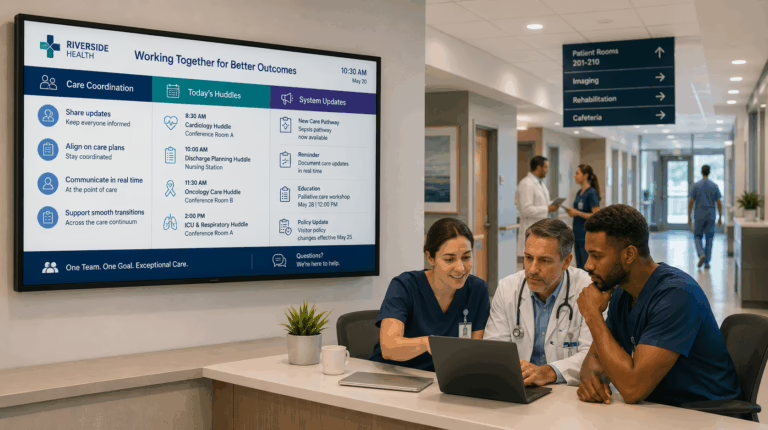
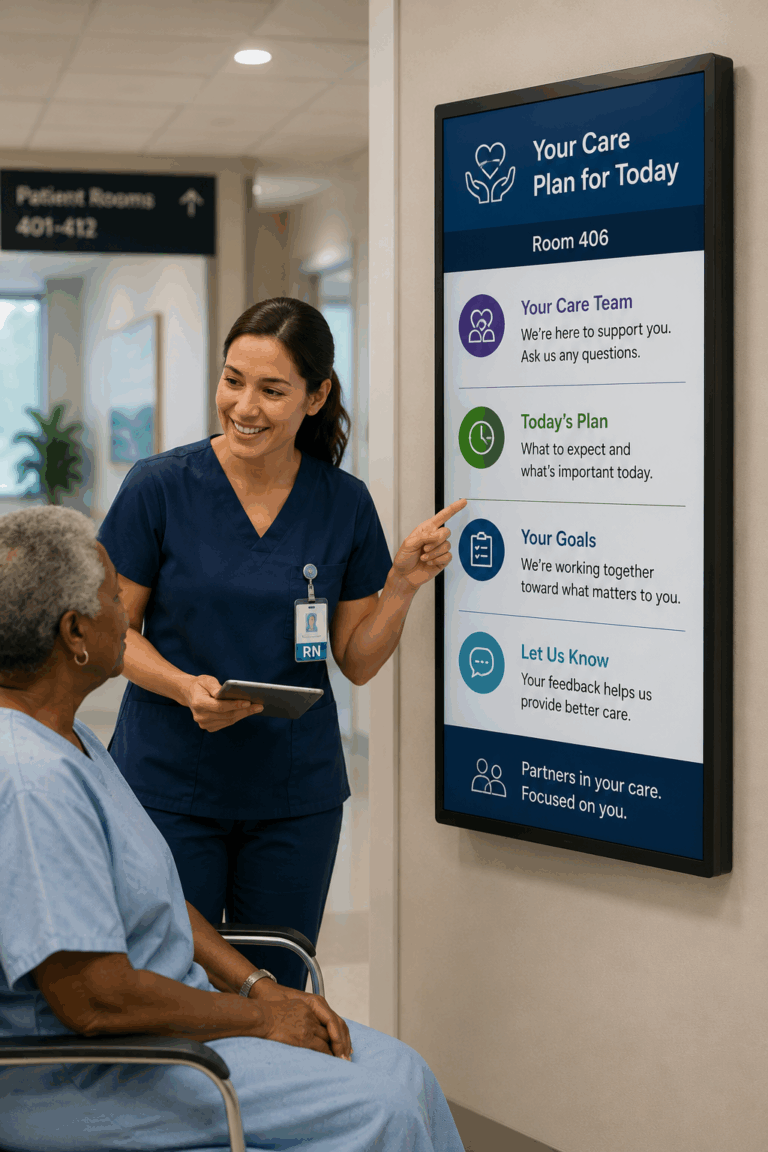
Digital signage supports multidisciplinary patient care by giving clinical teams real-time visibility into unit status, priorities, and workflow updates through shared displays. Staff-only screens show anonymized patient status, discharge readiness, transport timing, and daily goals—helping teams coordinate faster, reduce interruptions, and improve handoffs while remaining HIPAA-compliant.
7 ways hospitals use digital signage to coordinate MDT workflows
1. Unit huddle & daily goals boards
- Displays shift priorities, safety reminders, staffing notes
- Replaces paper boards and verbal updates
2. Patient flow & bed status visibility
- Shows anonymized bed availability, readiness, and bottlenecks
- Improves coordination between nursing, EVS, and admissions
3. Discharge coordination tracking
- Case management milestones
- Pharmacy, transport, and nursing alignment
- Fewer “is this patient ready?” interruptions
4. Imaging & transport readiness alerts
- Real-time indicators for imaging, procedures, or transport
- Reduces idle time and missed handoffs
5. Surgery & procedure workflow support
- HIPAA-safe patient identifiers
- Phase-of-care updates for perioperative teams
6. Staff-only emergency & rapid response messaging
- Override content for urgent alerts
- Consistent messaging across units instantly
7. Training, protocol, and compliance reminders
- Keeps rotating teams aligned without email overload
- Ideal for large hospitals with high staff turnover
Is digital signage HIPAA-compliant for care coordination?
Planning digital signage for care coordination?
- Recommended screen locations (clinical vs staff-only)
- MDT huddle board examples
- HIPAA-safe content rules
- Integration considerations (scheduling, alerts)
Looking for something specific?
Want the latest news in your inbox?
 | Thank you for Signing Up |
 | Thank you for Signing Up |


Don't forget to share!
Categories
Industries
Solutions
MCC News
Healthcare Digital Signage FAQs
Care coordination screens typically display anonymized patient status indicators, discharge readiness, bed availability, transport or imaging milestones, and unit‑level priorities. Content is tailored to the audience and location so teams see only the information relevant to their role and workflow.
Yes, when implemented correctly. Hospitals maintain HIPAA compliance by placing care coordination screens in staff‑only areas, using anonymized identifiers instead of patient names, and controlling who can publish or edit content. Proper deployment ensures signage improves coordination without exposing protected health information.
Digital signage can integrate with scheduling platforms, room booking tools, or alert systems to display real‑time updates such as procedure readiness, meeting schedules, or urgent notifications. Even without deep system integration, signage can centralize operational updates that reduce phone calls and workflow interruptions.